
Domestic violence
What is domestic violence?
Domestic violence is a power grab exercised by a spouse or former spouse with the aim of dominating their partner and imposing their power on them. This domination can be manifested by physical gestures, but also by words, behaviours, threats or prohibitions aimed at isolating, intimidating or humiliating the person.
The aggressor uses different strategies to maintain his grip: manipulation, emotional blackmail, psychological, economic, sexual or physical violence. These tactics often settle in gradually, sometimes making the situation difficult to recognize at first.
Violence can occur in all types of relationships: romantic, friendly, family or even after a separation. It is never justified, and it is important to know that there are resources to support you.
Cycle de la violence
Spousal violence is exercised by a spouse who seeks to control their partner using various means.
This control is part of a repetitive cycle composed of four phases: tension, aggression, justification, and reconciliation (also called Honeymoon).
Although each incident may seem isolated, it is part of a repeated dynamic that allows the aggressor to strengthen his grip on his partner.
Tension
Assault
Aggression occurs under one of the 5 forms of violence (physical, economic, verbal, sexual and psychological). It is therefore not only about gestures, but also about repeated and intentional strategies and behaviors aimed at depriving you of your freedom. It is possible that you have within yourself a feeling of outrage, anger, shame, sorrow, the feeling of humiliation...
Justification
Reconciliation (Honeymoon)
He tries to be forgiven; he sends you flowers, he is kind and caring, he promises beautiful things, he says he will change. Hope returns, you really hope he keeps his promises. It is the partner who decides when and how this reconciliation will happen. It is therefore also a form of manipulation to keep the victim in the relationship.

Forms of violence
Physical
Punching or kicking, hitting, slapping, shoving, choking, cornering, throwing or destroying objects, spitting, making death threats.
Verbal
Yelling, shouting, swearing at each other, insulting, saying mean/hurtful things, making threats, giving orders, cyberbullying, criticizing anything the other says or does.
Psychological
Possessive jealousy, sulking with the aim of punishing, rejecting, isolating friends or family, contemptuous attitudes or remarks, ignoring, harassment, threatening looks or gestures, being under tension, blackmail.
Economic
Preventing or forcing work, stealing money, forcing debts, controlling expenses, threatening to be deprived of money or property, leading the other into debt, criticizing purchases in order to control , to borrow money with no intention of returning it.
Sexual
Obscene remarks, sulking or exerting pressure in order to obtain sexual favours, abstinence (in order to punish), fondling, aggression, forced sexual relations, rape, forcing the other to use pornographic material (in an unhealthy way or with pressure), body bashing, forcing the other to have sex with another person for money or otherwise.

Coercive Control
Distinguish between couple conflict and domestic violence
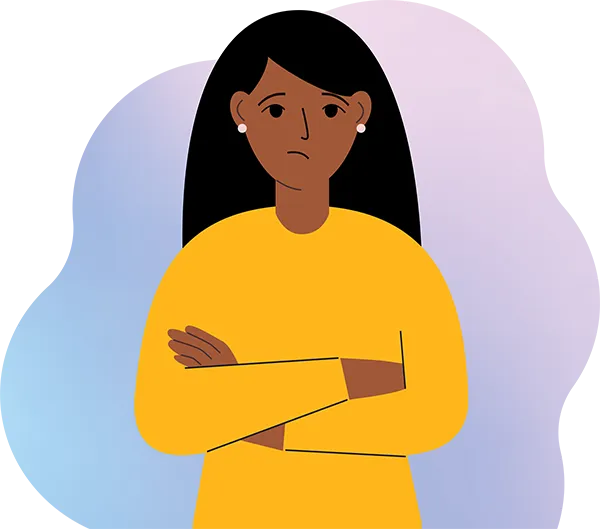
A couple conflict what is it?
Two partners who argue and who want their opinion to prevail over that of the other.
May include anger and aggression, but no violent gestures.
Neither partner fears the other, nor the consequences by expressing their point of view, each feels free to do so.
The person who initiated the conflict explains by saying that there is a dispute.
It's not always the same person who starts the fight, sometimes it's one, sometimes it's the other.
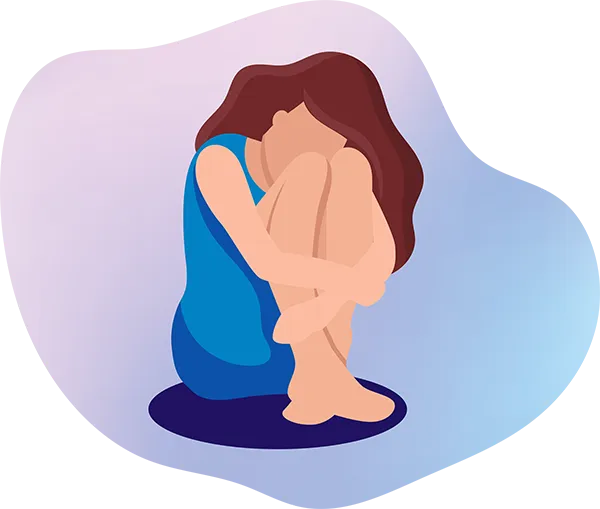
What about in a domestic violence relationship?
The goal is to dominate the other and the aggressor will intentionally use violence strategies and controlling behaviors repeatedly.
The aggressor wants to subjugate his victim, not win a disagreement.
The victim will not feel free of his reactions, since he will fear the consequences that could follow.
The aggressor justifies himself, looks for excuses.
It's always the same partner who attacks, and the same one who is the victim, no matter the situation.
Post-separation violence
Ending an abusive relationship doesn't always mean ending the abuse, unfortunately. The breakup (or its announcement) can lead to an escalation of violence, since the aggressor feels that his victim is trying to regain power over his life.
The separation is often a critical moment where the aggressor will use multiple strategies, going from honeymoon to aggression very quickly, in order to regain control over his ex-partner. The violence can begin after the separation, be the same as during the relationship or increase in intensity following the separation.
Les intervenantes de la maison Hina sont là pour soutenir les femmes tout au long de ce processus difficile. Elles peuvent aider à planifier des stratégies de protection et un départ sécuritaire si nécessaire. Pour de l’aide, appelez au 450 346-1645

Do you think you need help?
Your ex criticizes you for being a mother
You feel stressed because you never know what will trigger his anger
He threatens to call the DYP so that you lose the children
He accuses you of having a new lover
He texts you or calls you non-stop
He leaves you hateful, intimidating, threatening messages
He makes death threats
He makes you cry
He must have the last word
He pays nothing for children needs or child support
He accuses you of cheating on him
It blocks your access to the exit
He physically intimidates you
He makes you interrogate
He makes demeaning comments about your appearance
He threatens to publish photos (compromising or intimate) of you
You fear for yourself and your children
You are afraid during the exchange of children
If you have recognized in this list the reflection of certain lived situations and you feel sad, confused, worried or angry, it may be useful to remind you that YOU ARE NOT ALONE. Millions of other women are in the same situation, because violence is a social problem. Call us, we are here for you!

Myths and facts
Reality: The only ones who can change their violent behavior are the persons themselves. Despite all our will and all our love, we cannot make changes for the other.
Reality: Abused women stay with their partner because they love him, believe he will change and they are afraid. They are caught in the cycle of violence.
Reality: Violence in romantic relationships is due to a partner's desire to impose their power and control their partner. It is therefore a TAKEOVER.
Reality: Domestic violence has 5 forms: physical, psychological, verbal, economic and sexual violence. The different forms can all be present in a relationship, or only some of them.
Reality: Nothing can justify a person's violent behavior. Violence is a choice that the person makes. By comparison, do you get violent when you have a drink?
Reality: Victims may remain silent for a long time because they feel shame, fear and guilt. They may also want to seek to protect their partner, since they love him and hope that he will change.
Reality: “Did you see how she was dressed? She looked for it a bit! “, “she should never have walked alone so late at night”, “she kept playing the seducer with him, she had to expect him to have expectations and be impatient”: These are just a few examples of the guilt-inducing remarks that we hear too often in society. Such assertions place a heavy burden on the victims that does not belong to them, while they relieve the aggressor of responsibility.
Reality: 8 times out of 10, the aggressor is known to the victim, this proportion being higher for young people under 18 (85%) than for adults (68%). 39% of sexual assaults are committed in a home that the victim shares with the aggressor, 16% at the victim's home, 22% at the home of the aggressor, 6.3% in a public place or at school, 4% at work and 1.4% in transport.
Reference : https://www.inspq.qc.ca/agression-sexuelle/statistiques
Fact: The absence of a “no” does not equal a “yes”. The Canadian Criminal Code stipulates that, for there to be consent, the person must express his agreement by words or gestures. In this sense, “the absence of resistance does not amount to consent”. In addition, consent is an agreement that must be voluntary, free and informed. However, in several cases of sexual violence, the victim may be constrained by fear of reprisals, family breakdown, physical violence, death, etc. A victim may also find themselves in a context that prevents them from consenting.
Reality: Domestic violence is a social problem that has many consequences for public health. It is rooted in unequal relations between men and women. The promotion of equality as a fundamental value is therefore essential.
What can I do to help a victim of domestic violence?
- Listen without judgment
- Tell her we believe her and make it heartfelt
- Normalize her feelings
- Respect her rhythm, do not put pressure on her
- Do not impose your vision of her situation on her, but rather bring her to realize it on her own (offer her leaflets, telephone line, online tests)
- Make her feel that we are there for her, maintain contact with her if the aggressor wants to isolate her
- Not confronting her spouse, it could put her in even more danger